Secondary 1 – IB Diploma Programme
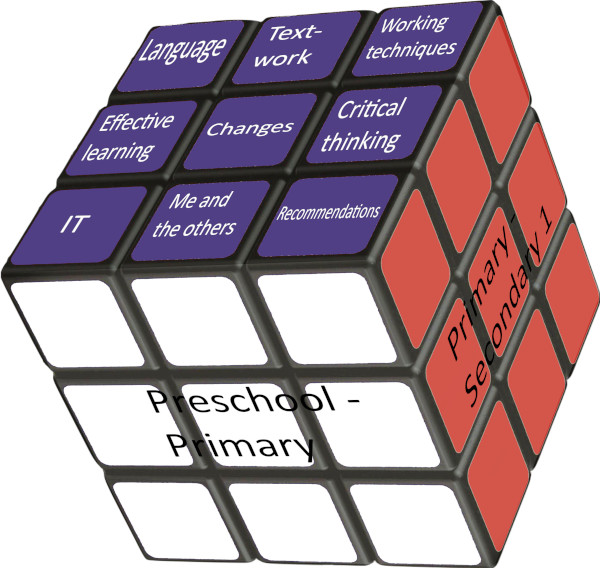
Please select a topic
Language
Your child has a secure command of everyday language, both written and spoken
Your child uses subject terminology and distinguishes between subject terminology and everyday language
Your child can contribute quality input into conversations/discussions
Your child acquires subject terminology independently
Your child has a language level of C1 (English B2)
Text work
Your child can comprehend texts independently
Your child can excerpt texts and summarize it in key words
Your child can understand and analyze technical texts
Your child can understand scientific texts in the foreign language and knows how to help himself with linguistic ambiguities
Your child is confident in using dictionaries and encyclopedias and in dealing with current everyday texts (daily politics)
Working techniques
Your child knows citation rules and applies them consistently
Your child is confident in using a collection of formulas
Your child identifies steps her-/himself to implement them according to their timing
Your child works according to a plan for the entire school year
Your child reflects on their own work process
Your child takes notes in class
Your child can place facts in a timeline and connect their knowledge
Your child grasps concepts independently
Your child can create experimental logs and assesses and evaluate fundamental data
Effective learning
Your child learns consistently, continuously, and not sporadically before mock exams and tests
Your child appears regularly and punctually at school
Your child always prepares and reviews lesson content and comes to class prepared
Your child can reflect on long tests and exams, is willing to acknowledge mistakes and learn from them
Your child does not learn off by heart, but tries to understand and relate content
Your child meets deadlines and is always on time
Your child knows his or her own learning type and can apply strategies for acquiring knowledge
Your child shows perseverance and is willing to overcome problems
Changes
For the most part, students work independently and autonomously. Not all content is discussed in class
Contents of homework are expected
The independent use of the library as a source of information is assumed
In addition, new ways of measuring performance (e.g., extended essay) are added
The teacher is in the role of a learning advisor, providing learning options
TOK and CAS are added as new subjects, in total there are fewer subjects (6+2), but these are more intensive and time-consuming
We expect students to become critical young adults who take responsibility for their environment. Therefore, IB students are role models for the younger members of our school community
There is a dress code in the IB
Critical thinking
Your child can carry out and interpret experiments, draw conclusions and thereby infer from the observation and the result to other facts (transfer)
Your child can work systematically with cross references to other subjects
Your child can make estimates (plausibility check)
Your child can work creatively, solution-oriented ("thinking out of the box")
IT
Spreadsheet, Dynamic Geometry Software, Word Processing, Presentation Software, Publisher
Students should be able to recognize dangers and fake news on the Internet and deal critically with sources
Me and the others
Your child recognizes his or her own role model function within the school community
Your child treats other people with respect and kindness
Your child is a team player and demonstrates intercultural competence
Your child is "up to date" on world politics
Your child actively participates in class and collaborates with others
Your child sees him/herself as part of the school community and is an active advocate for it ("community thinker")
Your child tries to solve problems within the school community first by him/herself and directly
Your child adopts environmentally friendly behaviour
Recommendations
Develop a healthy daily rhythm and pay attention to nutrition
Find a media-free balance to school
Identify your own learning curve and develop mindfulness
Develop curiosity for the contents of the subjects and develop a spirit for research