
Primary school – Secondary 1

Please select a topic
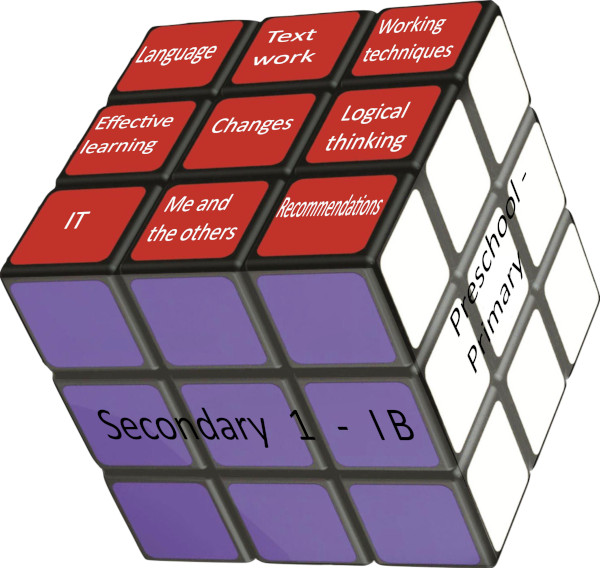
<h1>Primary school – Secondary 1</h1>

Language

Your child distinguishes between day-to-day language and subject terminology

Your child answers in complete sentences and has clear pronunciation and intonation

Your child learns and uses specialized terminology (this includes actively learning vocabulary/ subject terminology on a regular basis)

Your child can explain something to his or her classmates

Your child can understand basic instruction

Your child has a language level of B1 or higher

Text work

Your child can independently analyze (underline and highlight), document, present, and deliver texts

Your child can distinguish importance from unimportant and recognize ambiguities

Your child can plan, write, design and independently revise texts

Your child can summarize texts in his or her own words

Working techniques

Your child is familiar with basic techniques for using reference books

Your child keeps a homework notebook and completes homework assignments

Your child can work out solution strategies independently and only asks the teacher after their own attempts

Your child knows where to find information and can evaluate it

Your child keeps subject binders independently

Your child prepares and follows up on lessons at home (flashcards, review of exercises done, etc.)

Use of media: Your child can use different media and knows how to use them (IT, print media, audio recordings)

Effective learning

Your child keeps folders independently and accurately

Your child prepares lesson content before and after lessons

Your child can check results and self-asses

Your child organizes its own workplace

Your child writes homework and due dates in the homework notebook

Your child will ask if there is anything unclear

Your child turns in assignments on time

Your child shows patience and perseverance during the work phases

Your child has legible handwriting

Your child appears at school regularly and on time

Motivation: your child is willing to get involved even in "less interesting things" and does not lose courage in case of failure

Changes

There are more subject teachers

The teacher becomes an advisor

Higher standards are set for learning strategies

The learning pace of the class increases

There is more preparation and follow-up of lessons at home

There are more subjects, thus the students take more tests and exams

Students begin to assess their performance realistically and learn how to deal with disappointment

Students are expected to be able to act independently and make their own decisions

Students learn to manage their own time

Sometimes support from the parental home is no longer possible

Logical thinking

Your child quickly understands relations to everyday life

Your child can break down complex tasks into smaller tasks

Your child thinks systematically and finds its own solutions

Your child masters subject specified rules

Your child can record observations

Your child finds (creative) approaches to solutions

IT

Programs: PowerPoint (PPT), basic functions of Word

Photo Uploads

Write emails and send documents

Me and the others

Your child manages conflicts peacefully and/or seeks help

Your child can compromise

Your child actively seeks to connect with peers

Your child consciously perceives people in the environment and can understand the feelings of others

Your child can articulate their own wishes and needs and strike a balance between asserting their own wishes and withdrawing them

Your child acts in a self- and socially responsible way (no "snitch culture")

Your child listens and can compromise

Your child can give feedback and shows the ability to take criticism

Your child uses materials economically and not wastefully

Your child can justify their own opinion

Your child stays on topic during class discussions and can listen without interruptions

Your child looks others in the eye and treats all people in the school community with respect

Your child uses the polite form to address adults

Recommendations

Find a healthy balance to everyday school life (pursue hobbies, do sports ...)

Develop a healthy daily rhythm and pay attention to nutrition

Read books in the German language

Watch movies or shows in the German language